Overview
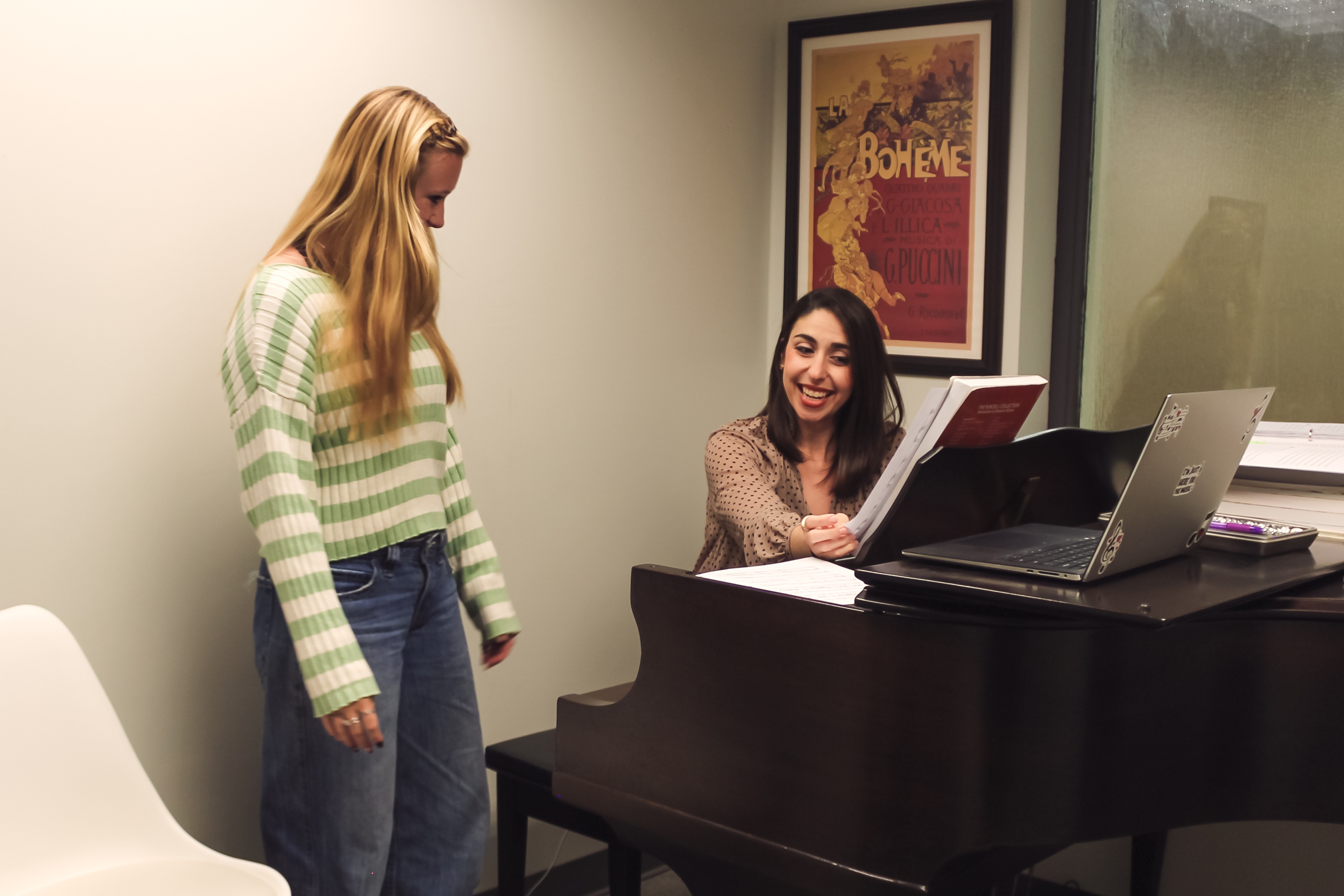
If you've always wanted to hone your skills as a classical, musical theater, or light pop vocalist, M&M Music has the voice teacher for you! Our voice faculty focuses primarily on classical and theatrical repertoire, with a touch of light pop mixed in as well. Proper vocal technique and health are KEY in our teaching. Each week, students are led through physical exercises to improve their vocal range, ear training, breath control, enunciation and more. Each student will set goals with their teacher to develop their own unique voice and find a love for vocal music!
Frequently Asked Questions
What’s the #1 reason to study voice and singing at M&M Music?
Healthy technique. Your voice is the one instrument you can't replace, so our teachers make vocal health the foundation of every lesson: breath support, placement, and building range safely, without strain. That foundation lets you sing the music you love with more power and control for years to come.
What styles of music do you teach?
Our voice teachers are trained in classical and musical theater repertoire, and that's where their lessons are strongest. Students who want to sing pop, jazz, or rock are welcome too; the same healthy technique carries over to every style.
How qualified are your voice instructors?
Our voice teachers are professionally trained in classical and musical theater singing, with years of teaching and performance experience.
They work with young singers and adult beginners alike, and they understand how voices change with age, so no student is ever pushed beyond what's healthy for their voice.
What will I learn from voice and singing lessons at M&M Music?
A typical lesson starts with warm-ups and breathing exercises, then moves into songs you choose with your teacher, from art songs and arias to Broadway and pop. Students preparing for a school musical, choir, or an audition can bring that music straight into lessons.
Beginners are welcome! You don't need experience or a "good voice" to start. A good voice is something you build.
How long does it take to learn how to sing?
Most students notice better breath control and pitch within the first few months. Because singing depends on muscles and coordination that keep developing, especially as young voices mature, singers see steady growth for years with consistent lessons and practice.
I don't have any musical background or ability. Can I still help my child practice?
Yes! Encourage short daily practice and make sure your child warms up before singing. Ask the teacher for warm-ups to do at home. Sitting in on a lesson now and then is a great way to learn what healthy singing should look and sound like.
